What's Tungsten Alloy Radiation Shield?


1. What's Tungsten Alloy Radiation Shield?
Tungsten alloy radiation shield is high-density radiation protection component manufactured through powder metallurgy using tungsten as matrix, with tungsten content of 90% or higher, and nickel, iron, or copper as binder elements. CTIA’s tungsten alloy radiation shields are primarily Tungsten-Nickel-Iron (W-Ni-Fe) and Tungsten-Nickel-Copper (W-Ni-Cu) material systems. Tungsten content, binder composition, and sintering conditions affect material density, strength, magnetic properties, and machinability. With its balanced physical and mechanical properties, tungsten alloy radiation shields are widely used in radiation protection applications across medical, nuclear medicine, industrial inspection, aerospace, and high-end equipment sectors.
2. Features of CTIA’s Tungsten Alloy Radiation Shield
(1) High Density and Efficient Radiation Attenuation: With density of 16.7–18.8 g/cm³ and tungsten’s atomic number of 74, tungsten alloy effectively attenuates high-energy radiation such as X-rays and gamma rays. Higher density enables compact radiation protection designs by reducing shielding thickness required for given attenuation level.
(2) Non-Toxic and Eco-Friendly: Being lead-free and non-radioactive, tungsten alloy avoids contamination risks associated with conventional lead shielding and supports environmentally responsible radiation protection applications.
(3) Good Mechanical Properties: Providing high tensile and compressive strength, wear resistance, and good toughness, tungsten alloy radiation shield can provide both structural support and radiation protection in components subjected to demanding mechanical loads.
(4) Excellent Machinability: Supporting Computer Numerical Control (CNC) machining, grinding, wire Electrical Discharge Machining (EDM), and other precision processes to manufacture complex, high-precision radiation shielding structures.
(5) Optional Low-Magnetic Performance: W-Ni-Cu offers low magnetic permeability for magnetic-field-sensitive environments such as Magnetic Resonance Imaging (MRI), helping minimize magnetic interference.
(6) Good Long-Term Stability: Maintaining stable shielding performance under long-term radiation exposure and complex operating conditions through good corrosion resistance and thermal stability.
3. Manufacturing Process of CTIA’s Tungsten Alloy Radiation Shield
CTIA’s tungsten alloy radiation shield manufacturing process mainly includes raw powder proportioning and mixing, compaction, high-temperature sintering, heat treatment, precision machining, surface treatment, and quality inspection. Near-net-shape manufacturing can be applied to complex radiation shields to reduce material loss, followed by precision machining to achieve the required dimensional accuracy and ensure that density, dimensional tolerances, and radiation shielding performance meet application requirements.
4. Applications of CTIA’s Tungsten Alloy Radiation Shield
(1) Medical and Nuclear Medicine: Used in radiotherapy collimators, Multi-leaf Collimator (MLC) leaves, gamma knife collimation components, syringe shielding sleeves, radiopharmaceutical shielding containers, radioactive source containers, and shielding components for Computed Tomography (CT) and Positron Emission Tomography (PET) equipment to provide radiation control and protection.
(2) Industrial Inspection: Used in gamma-ray radiography collimators for pipeline inspection, industrial radioactive source containers, CT equipment shielding covers, weld inspection equipment, and Non-Destructive Testing (NDT) protection components.
(3) Nuclear Industry and Scientific Research: Used in radioactive source containers, isotope transport shielding components, localized shielding structures around nuclear facilities, particle accelerator collimators, radioactive sample storage devices, and shielding structures for nuclear physics experiments.
(4) Aerospace and High-End Equipment: Used in radiation shielding plates and components for satellites, deep-space probes, high-energy detection equipment, space electronic systems, and other high-end equipment to support reliable operation in complex radiation environments.
5. Specifications of CTIA’s Tungsten Alloy Radiation Shield
(1) 90W-Ni-Fe/90W-Ni-Cu: Tungsten content approximately 90%, density approximately 17.0–17.3 g/cm³
(2) 92.5W/93W: Tungsten content approximately 92.5%–93%, density approximately 17.5–17.7 g/cm³
(3) 95W: Tungsten content approximately 95%, density approximately 18.0–18.2 g/cm³
(4) 97W: Tungsten content approximately 97%, density approximately 18.5 g/cm³
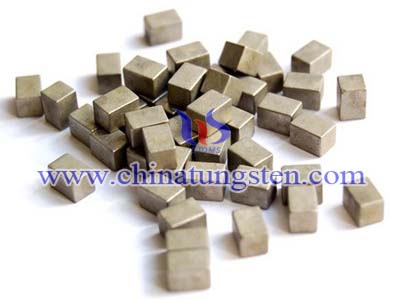
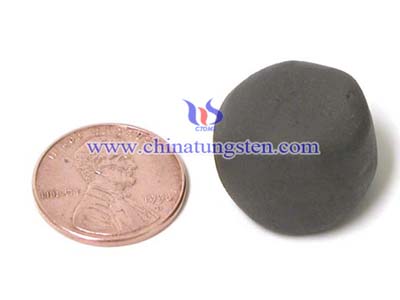
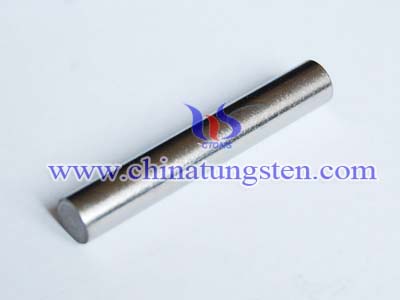
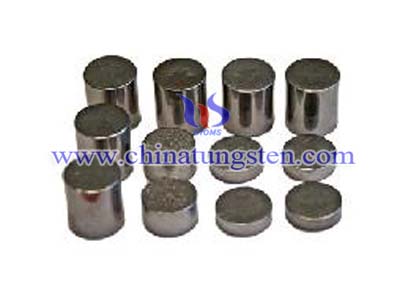
CTIA GROUP specializes in manufacturing and precision machining tungsten alloy radiation shields, backed by nearly 30 years of tungsten alloy manufacturing experience. CTIA combines material selection, powder metallurgy, and precision machining to manufacture complex shielding components in W-Ni-Fe and W-Ni-Cu material systems. CTIA produces shielding blocks, shielding tubes, radioactive source containers, collimators, and custom-shaped radiation shields for applications requiring effective radiation protection, high dimensional accuracy, and reliable long-term performance.
For any inquiry, please contact tungsten alloy manufacturer: CTIA GROUP
Email: sales@chinatungsten.com
Tel: 0086 592 5129696 / 0086 592 5129595
Website: tungsten-alloy.com
WeChat:

Related Products: