Tungsten Alloy Grids
1. What Are Tungsten Alloy Grids?
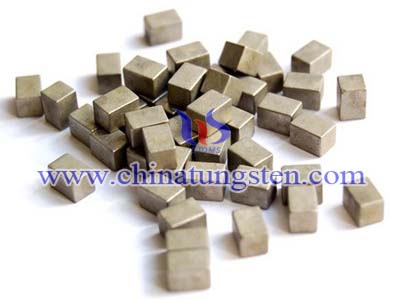
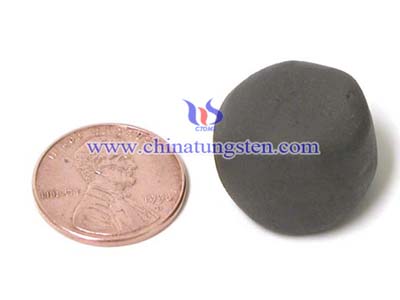
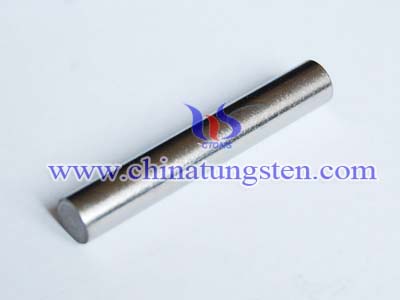
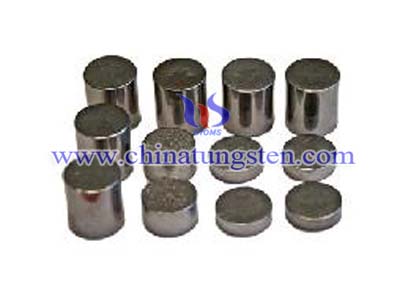
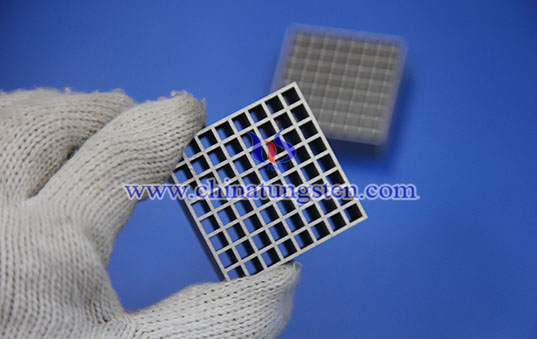
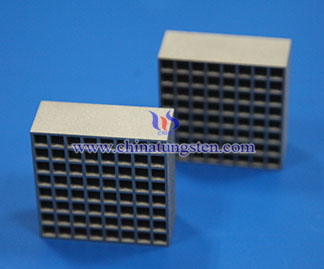
Tungsten alloy grids, also known as tungsten alloy collimators, are periodic grid or leaf structure components manufactured from high-purity tungsten powder with nickel, iron or copper, or other binders through powder metallurgy and precision machining. CTIA’s tungsten alloy grids utilize high linear attenuation coefficients against X-rays and γ-rays to provide radiation direction control, scatter suppression, or dynamic beam shaping. Compared with conventional lead, molybdenum, or aluminum grids, tungsten alloy grids offer higher density, lower radiation leakage, and better mechanical stability, serving as key radiation control components in medical imaging, precision radiotherapy, and industrial non-destructive testing.
2. Features of CTIA’s Tungsten Alloy Grids
(1) High Density and Excellent Attenuation: Density of 16.7–18.8 g/cm³ provides superior linear attenuation against 6 MV X-rays and higher-energy radiation compared with lead and molybdenum, enabling smaller structures and wall thicknesses as thin as 50–100 μm under equivalent shielding requirements.
(2) Low Leakage and High Conformity Accuracy: Tongue-and-groove or stepped interlocking designs in multi-leaf structures can control interleaf radiation leakage below 2%, while high-aspect-ratio anti-scatter grids effectively improve image contrast and signal-to-noise ratio.
(3) Excellent Mechanical and Thermal Stability: High hardness, low thermal expansion coefficient, high-temperature resistance, and deformation resistance support high-speed reciprocating motion and long-term operation in radiation environments.
(4) Non-Toxic Eco-Friendliness and Machinability: Lead-free tungsten alloy eliminates lead toxicity concerns. Diamond-like carbon or tungsten carbide coatings can reduce friction, while powder metallurgy supports batch production and 3D printing enables complex geometry customization.
3. Types of CTIA’s Tungsten Alloy Grids
(1) Anti-Scatter Grids: Composed of parallel or focused thin-walled tungsten alloy grid strips interspersed with low-attenuation spacer materials. Allows primary radiation to pass while efficiently absorbing large-angle scattered radiation, primarily improving CT and X-ray imaging quality.
(2) Multi-Leaf Collimators (MLC): Composed of dozens to hundreds of independently driven tungsten alloy leaves. Form dynamically conformable irradiation fields controlled via computer systems, serving as core beam-shaping components in radiotherapy.
(3) Collimator Grids: Include parallel-hole, pinhole, or honeycomb array structures used for beam collimation and resolution enhancement in nuclear medicine (SPECT/PET), industrial non-destructive testing, and high-energy physics experiments.
(4) Focused and Double-Focused Grids: Grid strips or leaves are inclined or trapezoidally designed according to radiation source geometry, effectively eliminating transmission penumbra and improving beam conformity precision.
4. Applications of CTIA’s Tungsten Alloy Grids
(1) Medical Imaging: Used in anti-scatter grids for Computed Tomography (CT) and digital X-ray systems to suppress scatter artifacts, improve image contrast, and reduce patient radiation dose.
(2) Radiotherapy: Used in multi-leaf collimators for Medical Linear Accelerators (LINAC) to support Three-Dimensional Conformal Radiation Therapy (3D-CRT), Intensity-Modulated Radiation Therapy (IMRT), and Volumetric Modulated Arc Therapy (VMAT), precisely shaping radiation fields and reducing radiation exposure to normal tissues.
(3) Nuclear Medicine: Used in collimators for Single Photon Emission Computed Tomography (SPECT) and Positron Emission Tomography (PET) systems to control γ-ray propagation and improve detection resolution and sensitivity.
(4) Industrial Non-Destructive Testing: Used in anti-scatter and collimation structures for high-energy X-ray industrial CT and radiographic inspection to limit scatter radiation and improve detection of internal defects in castings, composite materials, and aerospace components.
(5) High-Energy Physics and Scientific Research: Used in beam collimation, scatter suppression, and monochromatization components to control radiation propagation and experimental beam characteristics.
(6) Security Screening and Other Applications: Used in radiation-constraining structures for baggage screening and radioactive material detection equipment to control radiation coverage and reduce scatter interference.
5. Specifications of CTIA’s Tungsten Alloy Grids
(1) Grades: 90W-Ni-Fe, 92.5W-Ni-Fe, 95W-Ni-Fe, 95W-Ni-Cu
(2) Density: 16.7–18.8 g/cm³
(3) Dimensions: Grid wall thickness 50–100 μm; multi-leaf projected width 2.5–10 mm; length, grid height, spacing, and overall dimensions customizable
(4) Structures: Parallel, focused, dual-focused, mesh, pinhole array, and multi-leaf structures
CTIA GROUP has nearly 30 years of experience in tungsten alloy manufacturing, with expertise in the design and precision machining of high-density tungsten alloy shields. CTIA provides tungsten alloy grids in various grades, density levels, and structural configurations for medical imaging, nuclear medicine, industrial inspection, nuclear technology, and advanced equipment, meeting requirements for radiation control, precision machining, and long-term operational stability.
For any inquiry, please contact tungsten alloy manufacturer: CTIA GROUP
Email: sales@chinatungsten.com
Tel: 0086 592 5129696 / 0086 592 5129595
Website: tungsten-alloy.com
WeChat:

Related Products: