Tungsten Alloy Radiopharmaceutical Shielding Containers
1. What Are Tungsten Alloy Radiopharmaceutical Shielding Containers?
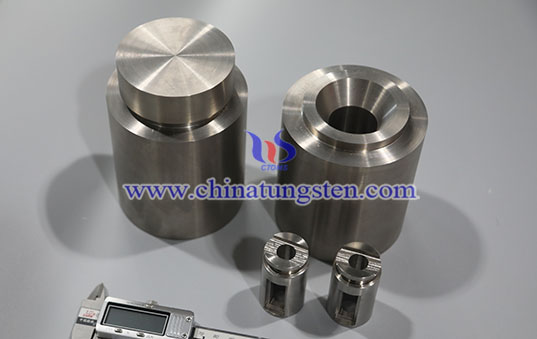
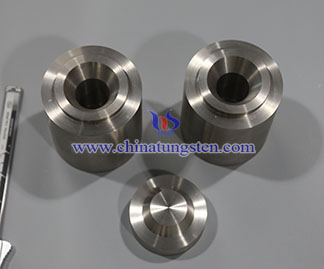
Tungsten alloy radiopharmaceutical shielding containers are shielding containers for the storage, transfer, and handling of radiopharmaceuticals and radioactive isotopes such as I-125, F-18, Tc-99m, and Lu-177. CTIA’s tungsten alloy radiopharmaceutical shielding containers provide effective attenuation of X-rays and γ-rays generated by radioactive materials, helping reduce radiation exposure to operators and surrounding areas in nuclear medicine, radiopharmaceutical production, and research.
2. Features of CTIA’s Tungsten Alloy Radiopharmaceutical Shielding Containers
(1) Effective Radiation Shielding: Density of 17.0–18.5 g/cm³, approximately 1.5–1.7 times that of lead, provides effective attenuation of 511 keV γ-rays from ¹⁸F. The lower Half-Value Layer (HVL) than lead allows thinner walls and more compact structures under equivalent shielding requirements.
(2) Lead-Free Safety: Lead-free material avoids lead contamination and toxicity concerns, supporting RoHS, REACH, and lead-free requirements in medical environments.
(3) Durability and Stability: High tensile strength, hardness, wear resistance, corrosion resistance, and dimensional stability support repeated handling, sterilization, and long-term use.
(4) Convenient Handling: Lower weight than lead containers facilitates manual handling and helps reduce finger dose and whole-body radiation exposure during operation.
3. Applications of CTIA’s Tungsten Alloy Radiopharmaceutical Shielding Containers
(1) Nuclear Medicine: Storing, dispensing, and handling radiopharmaceuticals such as ¹⁸F-FDG and ⁶⁸Ga-DOTATATE in Positron Emission Tomography (PET), Single-Photon Emission Computed Tomography (SPECT), and related procedures.
(2) Radiopharmaceutical Production: Providing local shielding during the production, filling, and quality inspection of radiopharmaceuticals such as ¹⁸F, ⁶⁸Ga, and ⁹⁹ᵐTc to reduce occupational radiation exposure.
(3) Radioisotope Research: Temporarily storing, transferring, and handling radioactive samples such as ¹²⁵I, ¹³¹I, and ¹⁷⁷Lu in research institutions and laboratories.
(4) Radiopharmaceutical Transportation: Supporting short-distance transfer within medical facilities, internal movement, and temporary storage of radiopharmaceuticals and isotopes, with shielding structures configurable to transportation requirements.
(5) Hot Cell Dispensing Protection: Supporting radiopharmaceutical dispensing, injection preparation, and syringe shielding inside Hot Cells to reduce close-range radiation exposure.
(6) Radioactive Waste Shielding: Temporarily storing low-activity waste and radioactive samples generated during radiopharmaceutical handling to reduce local radiation dose rates.
4. Specifications of CTIA’s Tungsten Alloy Radiopharmaceutical Shielding Containers
(1) Grades: 90WNiFe, 92.5WNiFe, 95WNiFe, 97WNiFe
(2) Density: 17.0–18.5 g/cm³
(3) Structure: Container body, lid, inner liner, and vial-fitting cavity
(4) Dimensions: Outer diameter 40–140 mm, height 70–140 mm; inner diameter and cavity dimensions customizable to vial specifications
(5) Compatible Containers: 5–30 mL radiopharmaceutical vials and other customized containers
CTIA GROUP has nearly 30 years of experience in tungsten alloy manufacturing, with expertise in design, precision machining, and shielding component production. CTIA supplies tungsten alloy containers in various grades, densities, structures, and dimensions, customized to meet the radiation shielding, precision assembly, and long-term service requirements of nuclear medicine, radiopharmaceutical production, and research applications.
For any inquiry, please contact tungsten alloy manufacturer: CTIA GROUP
Email: sales@chinatungsten.com
Tel: 0086 592 5129696 / 0086 592 5129595
Website: tungsten-alloy.com
WeChat:
Related Products: