Tungsten Alloy Multileaf Collimator

1. What’s Tungsten Alloy Multileaf Collimator?
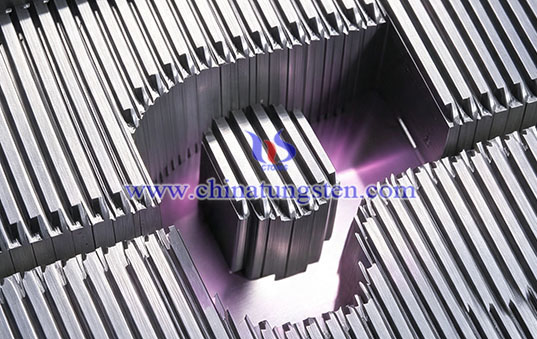
Tungsten alloy multileaf collimator (MLC) is an important beam control component in Medical Linear Accelerators (LINAC), typically installed in treatment heads to restrict and shape high-energy X-ray beams. It consists of dozens to more than one hundred pairs of independently movable tungsten alloy leaves. Computer-controlled leaf positioning forms different radiation fields that closely conform to tumor target volumes, making it an important component of Three-Dimensional Conformal Radiation Therapy (3D-CRT), Intensity-Modulated Radiation Therapy (IMRT), Volumetric Modulated Arc Therapy (VMAT), and Stereotactic Body Radiation Therapy (SBRT).
2. Features of CTIA’s Tungsten Alloy Multileaf Collimator
(1) Effective Radiation Shielding: Attenuating high-energy therapeutic X-rays and reducing transmission radiation through shielded areas; 75 mm-thick tungsten alloy leaves, for example, can limit radiation leakage to below 2%.
(2) Precise Field Shaping: Using independently movable leaves to form complex radiation fields through different aperture combinations and improve target conformity.
(3) Dynamic Dose Modulation: Working with Treatment Planning Systems (TPS) to move leaves along programmed trajectories and dynamically adjust radiation field shape and beam fluence.
(4) Low-Leakage Structure: Using stepped, tongue-and-groove, rounded, or focused leaf-side and leaf-end designs to reduce interleaf leakage and optimize radiation field penumbra.
(5) High Strength, Wear Resistance: Providing high density, mechanical strength, and wear resistance for frequent reciprocating movement and long-term precision operation.
3. Basic Structure and Working Principle of Tungsten Alloy Multileaf Collimator
Tungsten alloy multileaf collimator mainly consists of tungsten alloy leaves, drive mechanisms, position feedback systems, and control systems. The leaves are typically arranged in opposing pairs, with each leaf driven by an independent motor and moving perpendicular to the radiation beam.
Treatment Planning System (TPS) calculates leaf positions according to the patient’s target contour and dose distribution, while the control system drives the leaves to form the required radiation field. In 3D-CRT, the multileaf collimator mainly shapes static radiation fields; in IMRT and VMAT, the leaves move continuously during treatment to modulate dose by changing field apertures and beam fluence.
4. Applications of CTIA’s Tungsten Alloy Multileaf Collimator
(1) Three-Dimensional Conformal Radiation Therapy (3D-CRT): Forming conformal radiation fields according to tumor target geometry to reduce radiation exposure to normal tissues.
(2) Intensity-Modulated Radiation Therapy (IMRT): Modulating beam fluence in different regions through leaf movement to achieve precise dose distribution.
(3) Volumetric Modulated Arc Therapy (VMAT): Combining gantry rotation, dose-rate variation, and leaf movement for continuous dynamic irradiation.
(4) Stereotactic Body Radiation Therapy (SBRT): Supporting high-precision radiotherapy for small target volumes with concentrated dose delivery.
5. Specifications of CTIA’s Tungsten Alloy Multileaf Collimator
(1) Material: W-Ni-Fe
(2) Grades: 90WNiFe, 92.5WNiFe, 95WNiFe, 97WNiFe
(3) Density: 16.7–18.8 g/cm³
(4) Dimensions: Leaf number, projected leaf width, thickness, length, customizable
CTIA GROUP has nearly 30 years of experience in tungsten alloy manufacturing, with expertise in precision machining of tungsten alloy shields. CTIA’s tungsten alloy multileaf collimator supports customization of leaf geometry, dimensions, and machining tolerances according to radiotherapy equipment requirements, ensuring radiation shielding, accurate field shaping, and precise assembly.
For any inquiry, please contact tungsten alloy manufacturer: CTIA GROUP
Email: sales@chinatungsten.com
Tel: 0086 592 5129696 / 0086 592 5129595
Website: tungsten-alloy.com
WeChat:

Related Products: