Tungsten Alloy Radiation Shield Q&A


Common Technical Questions About Tungsten Alloy Radiation Shield
Q1 What are tungsten alloy shielding components?
Tungsten alloy shielding components, also known as tungsten alloy radiation shield, are functional metal parts manufactured primarily from heavy tungsten alloys through powder metallurgy, sintering densification, and precision machining processes such as turning, grinding, milling, drilling, and polishing. They are used to attenuate and block ionizing radiation, including X-rays and gamma rays. Their core function leverages tungsten's high atomic number (74) and high density, causing incident photons to undergo interactions such as the photoelectric effect and Compton scattering within the material, thereby reducing the radiation intensity after penetrating the shielding component.
Common tungsten alloy shielding components are mainly made from heavy tungsten alloy systems such as W-Ni-Fe and W-Ni-Cu, with tungsten content typically around 90% to 97% or higher, and actual densities generally ranging from approximately 17 to 18.8 g/cm³. The tungsten content, material densification, and alloy microstructure all affect radiation attenuation capability. Generally speaking, under similar conditions, higher tungsten content and higher material density contribute to better shielding effectiveness within a limited space.
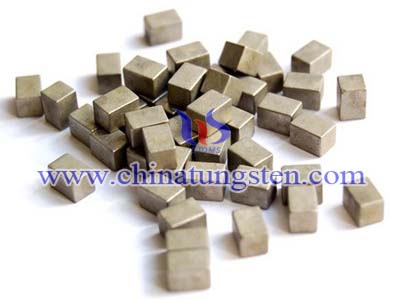
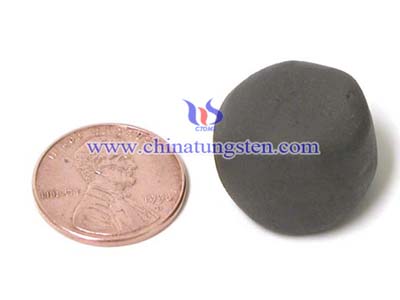
Compared with plain tungsten plates, tungsten rods, and other material products, tungsten alloy shielding components are usually functional parts that have undergone structural design and precision machining. They can be manufactured as shielding blocks, shielding rings, shielding sleeves, collimators, radioactive source containers, syringe shielding sleeves, and various custom-shaped parts with holes, grooves, tapered holes, and complex curved surfaces. Therefore, they not only provide radiation attenuation functions but also simultaneously serve roles such as positioning, support, collimation, sealing, and mechanical protection.
Tungsten alloy shielding components are widely used in medical X-ray and CT equipment, radiotherapy devices, nuclear medicine, radiopharmaceutical handling, industrial gamma-ray flaw detection, scientific research instruments, and the nuclear industry. Compared with traditional lead shielding materials, tungsten alloys feature high density, relatively high mechanical strength, good wear resistance, excellent high-temperature performance, and can be machined into compact, structurally complex, and high-precision shielding assemblies. They are therefore particularly suitable for applications with space constraints, high mechanical loads, and strict dimensional accuracy requirements.
The actual shielding capability of tungsten alloy shielding components cannot be judged solely by tungsten content or density; instead, it should be comprehensively designed based on radiation type, photon energy, shielding thickness, material density, radiation incidence direction, and the target attenuation rate. For example, the energy spectrum of medical X-ray equipment differs significantly from the gamma rays produced by radioisotopes such as Cs-137 and Co-60, and the corresponding shielding thickness and structural design will also vary accordingly. Professional shielding components typically require determination of key parameters such as HVL (half-value layer), TVL (tenth-value layer), transmittance, attenuation factor, or lead equivalent based on specific operating conditions.
More details are available in the document below.
2. Why can tungsten alloy shield X-rays and gamma rays?
The reason tungsten alloy can effectively shield X-rays and gamma rays lies essentially in its combination of high atomic number, high density, and relatively high electron density. When high-energy photons enter tungsten alloy, they undergo interactions such as photoelectric absorption, Compton scattering, and pair production with the atoms and electrons in the material, causing the photons to be absorbed, deflected, or transfer energy, thereby reducing the photon flux and radiation dose after penetrating the material. NIST's XCOM database quantitatively describes the photon attenuation behavior of different materials across the energy range from 1 keV to 100 GeV by calculating photoelectric absorption, Compton scattering, pair production, and total attenuation cross sections.
(1) High atomic number is an important reason for tungsten's excellent photon shielding capability
(2) High density enables tungsten alloy to achieve greater attenuation capability within a smaller thickness
(3) When X-rays and gamma rays enter tungsten alloy, they are not simply absorbed all at once
A more accurate professional description is that photons are attenuated by the material, rather than all X-rays or gamma rays being absorbed in a single event. The main mechanisms include:

Therefore, tungsten alloy shielding components actually reduce radiation transmittance through the combined action of multiple interaction mechanisms.
(4) Why can't high-energy gamma rays be explained by high Z alone?
(5) The high density and high Z of tungsten alloy need to be considered together
(6) Why is tungsten alloy suitable for manufacturing precision shielding components, not just shielding plates?
(7) Why can't we simply say how many times better tungsten alloy is than lead in shielding capability?
(8) What does the customer really need to provide for tungsten alloy shielding component design?
More details are available in the document below.
3. What types of radiation can tungsten alloy shield?
Tungsten alloy is a typical high-density, high-atomic-number shielding material. Its most mature and primary applications are for X-rays and gamma rays. Its core function is not simply to completely block radiation, but rather to exploit the interactions between high-density, high-atomic-number materials and incident radiation particles—causing absorption, scattering, energy transfer, or secondary particle generation—thereby reducing the radiation intensity after penetrating the shield.
However, tungsten alloy is not a universal shielding material that is equally effective against all types of radiation. The physical mechanisms of different radiations vary significantly. Therefore, when designing tungsten alloy shielding components, it is essential to first clarify the radiation type, energy range, source strength, target attenuation rate, and geometric conditions of use. The applicability and design approaches for tungsten alloy differ for X-rays, gamma rays, beta particles, neutrons, alpha particles, as well as high-energy electrons, protons, and other radiations.
(1) X-rays – one of the most typical application areas for tungsten alloy
(2) Gamma rays – an important application direction for tungsten alloy
(3) Beta rays – can be shielded, but design principles differ from X/gamma rays
(4) Alpha rays – theoretically shieldable, but usually unnecessary to use tungsten alloy
(5) Neutron radiation – tungsten alloy is not an ideal single shielding material
(6) High-energy electrons – tungsten alloy can produce significant attenuation, but bremsstrahlung must be considered
(7) Protons and other charged particles – can participate in shielding, but are not the conventional first choice
(8) Comprehensive assessment of applicability of tungsten alloy for different radiation types
(9) Can tungsten alloy shield multiple types of radiation simultaneously?
(10) Shielding capability of tungsten alloy cannot be judged by tungsten content alone
More details are available in the document below.
Q4 What is the density of tungsten alloy shielding components?
The density of tungsten alloy shielding components is not a fixed value, but is determined jointly by tungsten content, binder phase composition, powder metallurgy process, and final densification. For the tungsten heavy alloys (WHAs) most widely used in engineering applications today, one of their core advantages is a high density approaching that of pure tungsten, while also offering good toughness, machinability, and impact resistance. This makes them particularly suitable for manufacturing high-density shielding structures such as X-ray and gamma-ray shielding components, collimators, shielding sleeves, shielding rings, and radioactive source containers.
(1) Typical density range of tungsten alloy shielding components
(2) Why does higher tungsten content generally lead to higher density?
(3) What is the difference between tungsten alloy density and pure tungsten density?
(4) Does higher density always mean better shielding performance of tungsten alloys?
(5) Why is density uniformity particularly important for shielding components?
(6) How is the density of tungsten alloy shielding components measured?
(7) What density should be specified when procuring tungsten alloy shielding components?
(8) What does density truly mean for the design of tungsten alloy shielding components?
More details are available in the document below.
Tungsten Alloy Radiation Shield Q&A List:
Q1 What are tungsten alloy shielding components?
Q2 Why can tungsten alloy shield X-rays and gamma rays?
Q3 What types of radiation can tungsten alloy shield?
Q4 What is the density of tungsten alloy shielding components?
Q5 Which has better shielding effectiveness, tungsten alloy or lead?
Q6Can tungsten alloy replace lead for radiation shielding?
Q7 How thick do tungsten alloy shielding components need to be?
Q8 How to calculate the shielding thickness of tungsten alloy?
Q9 What are HVL and TVL?
Q10 What are the shielding performance differences among 90W, 93W, 95W, and 97W tungsten alloys?
Q11 Can tungsten alloy shielding components be used in X-ray equipment?
Q12 Can tungsten alloy be used in CT equipment?
Q13 What is the function of a tungsten alloy collimator?
Q14 Can tungsten alloy be used in linear accelerator MLCs?
Q15 What is the function of a tungsten alloy syringe shielding sleeve?
Q16 What is a tungsten alloy shielding ring?
Q17 Can tungsten alloy be used for radioactive source containers?
Q18 Can tungsten alloy be used in industrial gamma-ray flaw detection?
Q19 Can tungsten alloy shielding components be custom-made according to drawings?
Q20 What inspection reports are required for tungsten alloy shielding components?
What technical parameters should be given priority attention when purchasing tungsten alloy shielding components?
Q1: What are tungsten alloy shielding components?
Q2: What materials are tungsten alloy shielding components typically composed of?
Q3: What are the differences between tungsten alloy and pure tungsten shielding components?
Q4: Why does the tungsten content in tungsten alloy affect shielding performance?
Q5: What is the common density of tungsten alloy shielding components?
Q6: What are the differences among 90W, 93W, 95W, and 97W tungsten alloys?
Q7: Does higher density of tungsten alloy necessarily mean stronger radiation shielding capability?
Q8: Why can tungsten alloy shield X-rays?
Q9: Why can tungsten alloy shield gamma rays?
Q10: Does tungsten alloy shield radiation primarily through the photoelectric effect, Compton scattering, or pair production?
Q11: How do the main attenuation mechanisms of tungsten alloy change at different photon energies?
Q12: What types of ionizing radiation can tungsten alloy shield?
Q13: Can tungsten alloy shield alpha rays?
Q14: Can tungsten alloy shield beta rays?
Q15: Can tungsten alloy shield high-energy photons other than X-rays and gamma rays?
Q16: Can tungsten alloy shield neutrons?
Q17: Why is the shielding mechanism of tungsten alloy for neutrons different from that for X-rays and gamma rays?
Q18: Why is tungsten alloy usually required to be combined with hydrogen‑containing materials, boron, or other neutron‑absorbing materials when used for neutron shielding?
Q19: Does tungsten alloy produce secondary gamma rays after shielding neutrons?
Q20: Can tungsten alloy simultaneously achieve combined shielding for both neutrons and gamma rays?
Q21: How do the high atomic number and high density of tungsten alloy each contribute to shielding performance?
Q22: Do tungsten alloy shielding components have issues with irradiation activation?
Q23: Is high‑purity tungsten suitable for low‑background radiation shielding?
Q24: Do tungsten alloy shielding components generate their own radioactivity?
Q25: Why is it necessary to pay attention to trace radioactive impurities such as U, Th, K, and Co in tungsten materials for low‑background experiments?
Read More: Tungsten Alloy Radiation Shield Q&A.pdf
For any inquiry, please contact tungsten alloy manufacturer: CTIA GROUP
Email: sales@chinatungsten.com
Tel: 0086 592 5129696 / 0086 592 5129595
Website: tungsten-alloy.com
WeChat:

Related Products: