Types of Tungsten Alloy Radiation Shield


Tungsten alloy radiation shield has become an important radiation protection material for medical, industrial, and nuclear applications due to its effective radiation attenuation, high strength, lead-free composition, and good machinability. Different applications have different requirements for shielding efficiency, structural form, magnetic properties, and mechanical performance, resulting in various tungsten alloy material systems and shielding structures. Tungsten alloy radiation shield types can be classified by material composition, geometric form, functional purpose, and applications, providing a systematic view of its characteristics and applications.
1. Types of CTIA’s Tungsten Alloy Radiation Shield by Material Composition
Tungsten alloy radiation shield mainly includes W-Ni-Fe and W-Ni-Cu systems. Different binder phases affect magnetic properties, strength, toughness, and machinability.
(1) W-Ni-Fe: Slightly magnetic or weakly magnetic, with density of 16.5–18.8 g/cm³, high tensile strength, and good toughness. It is suitable for load-bearing shielding components and is the most widely used type.
(2) W-Ni-Cu: Non-magnetic or with very low magnetic permeability, with density comparable to W-Ni-Fe, good corrosion resistance and thermal conductivity. It is particularly suitable for magnetic-field-sensitive environments such as Magnetic Resonance Imaging (MRI) and precision equipment requiring minimal magnetic interference.
(3) Other Composite Types: Modified alloys with small additions of molybdenum, cobalt, or other elements, as well as limited applications of pure tungsten, for special high-temperature, high-energy, or ultra-precision requirements.
Common standard grades include ASTM B777 / AMS-T-21014 Class 1–4, corresponding to 90W, 92.5W, 95W, and 97W grades, with tungsten content and performance grade selected according to application requirements.
2. Types of CTIA’s Tungsten Alloy Radiation Shield by Geometric Form
Tungsten alloy radiation shield can be classified by structural form according to actual application requirements. This classification is intuitive and commonly used in engineering design and product selection.
(1) Plate and Sheet Shields: Flat plates, thin sheets, and shielding plates for large-area uniform protection, such as equipment liners, reactor shielding layers, and CT shielding plates. Simple structures offer relatively low manufacturing costs.
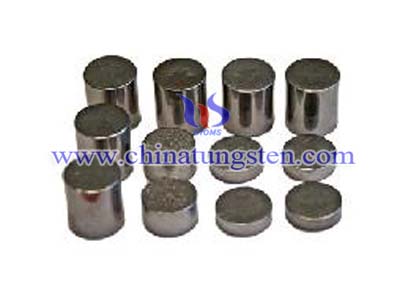
(2) Tubular and Cylindrical Shields: Hollow tubes, sleeves, and cylinders commonly used for syringe shielding sleeves, radiation guide shielding, and accelerator beam guide tubes, combining containment and collimation functions.
(3) Containers: Enclosed or semi-enclosed containers, source containers, isotope containers, and transport containers for storing and transporting radioactive materials or nuclear waste. Types include fixed integral containers, portable quick-opening containers, transport containers with double covers, and modular containers.
(4) Custom-Shaped Shields: Collimators, Multileaf Collimator (MLC) leaves, conical focusing components, rings, porous structures, and hollow blocks. These components require precision machining or near-net-shape forming and are key precision components in medical radiotherapy equipment.
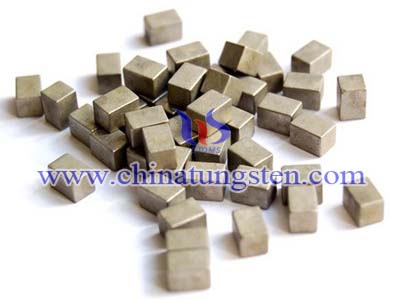
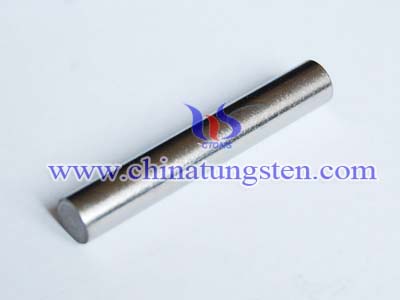
(5) Blocks and Rods: Solid blocks, rods, and other simple shapes used for local shielding, modular protection, or secondary machining.
3. Types of CTIA’s Tungsten Alloy Radiation Shield by Functional Purpose
Tungsten alloy radiation shield can also be classified according to its primary protection function, including collimation, radiation protection, containment and storage, and multifunctional applications.
(1) Collimation Shields: Collimators, multileaf collimator leaves, and beam control components for precisely guiding and limiting radiation direction and beam shape.
(2) Protective Shields: Shielding plates, protective covers, and shielding wall components for blocking radiation over large or localized areas.
(3) Containment and Storage Shields: Syringe shields, vial shields, isotope source containers, and nuclear waste containers for radioactive material containment and protection.
(4) Multifunctional Shields: Integrated components combining radiation shielding with structural support, vibration reduction, thermal conduction, or other functions.
4. Types of CTIA’s Tungsten Alloy Radiation Shield by Applications
Tungsten alloy radiation shield is widely used in medical, industrial inspection, nuclear, scientific research, and aerospace applications, with different fields emphasizing different structural and performance requirements.
(1) Medical: Used in Computed Tomography (CT), Positron Emission Tomography (PET), X-ray equipment, radiotherapy, Gamma Knife, and nuclear medicine equipment.
(2) Industrial Inspection: Used in gamma-ray radiography, industrial CT, weld inspection, and Non-Destructive Testing (NDT).
(3) Nuclear Industry and Scientific Research: Used in reactors, accelerators, radioactive sample containers, and nuclear physics experiments.
(4) Aerospace: Used in satellites, deep-space probes, high-energy detection equipment, and space electronics.
Tungsten alloy radiation shield can be classified by material composition, geometric form, functional purpose, and applications. Different types have distinct material properties, structural forms, and application requirements. The main types of CTIA’s tungsten alloy radiation shield are summarized in picture below.

CTIA GROUP has nearly 30 years of tungsten alloy manufacturing experience and produces precision-machined tungsten alloy radiation shield in 90W, 92.5W, 95W, and 97W grades using W-Ni-Fe and W-Ni-Cu material systems. CTIA manufactures various shielding types with customized density, strength, magnetic properties, and structures for medical, industrial inspection, nuclear, scientific research, and high-end equipment applications.
For any inquiry, please contact tungsten alloy manufacturer: CTIA GROUP
Email: sales@chinatungsten.com
Tel: 0086 592 5129696 / 0086 592 5129595
Website: tungsten-alloy.com
WeChat:

Related Products: