Tungsten Alloy Radioactive Source Containers
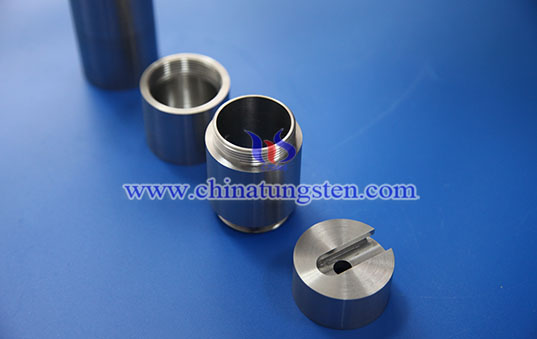
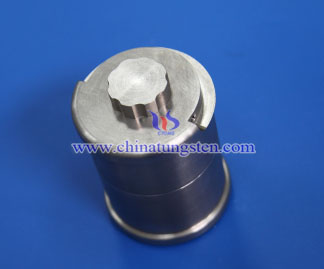
1. What Are Tungsten Alloy Radioactive Source Containers?
Tungsten alloy radioactive source containers are radiation shielding containers designed for the storage, transportation, and handling of radioactive materials. Manufactured from tungsten heavy alloy, CTIA’s tungsten alloy radioactive source containers provide effective γ-ray and X-ray shielding with compact structures and reliable mechanical performance, supporting applications in nuclear medicine, radiotherapy, industrial non-destructive testing, geological exploration, research, and nuclear technology.
2. Features of CTIA’s Tungsten Alloy Radioactive Source Containers
(1) High-Efficiency Shielding: Providing effective attenuation of γ-rays and X-rays through tungsten alloy’s high density and high atomic number, reducing radiation leakage during radioactive source storage and handling.
(2) Compact Structure: Achieving smaller container sizes and thinner shielding structures than lead materials under equivalent protection requirements.
(3) Structural Durability: Maintaining structural integrity through high strength, hardness, and wear resistance during transportation, handling, and long-term use.
(4) Lead-Free Safety: Eliminating lead contamination risks with lead-free tungsten alloy materials, supporting safe use in medical, industrial, and research environments.
(5) Precision Customization: Supporting turning, milling, drilling, and other precision machining processes to achieve customized structures according to radioactive source dimensions and shielding requirements.
3. Working Principle of Tungsten Alloy Radioactive Source Containers
Tungsten alloy radioactive source containers reduce radiation transmission through high-density tungsten alloy shielding layers. When γ-rays and X-rays pass through the tungsten alloy, their energy is gradually attenuated through interactions such as photoelectric absorption and Compton scattering. The high atomic number (Z=74) and density of tungsten increase radiation interaction probability, improving shielding efficiency.
4. Types of CTIA’s Tungsten Alloy Radioactive Source Containers
(1) Fixed Integrated Containers: Thick-wall structures for stationary shielding applications such as hot cells and radioactive waste temporary storage.
(2) Portable Quick-Opening Containers: Quick-opening structures with knobs or clamps for radiopharmaceutical dispensing and therapeutic dose transfer.
(3) Double-Cover Transport Containers: Dual-cover structures for radioactive source transportation with enhanced drop resistance, fire resistance, and safety performance.
(4) Directional Collimation Containers: Directional shielding windows for controlling radiation paths in industrial radiography and research irradiation applications.
(5) Modular Containers: Modular cylinder structures for flexible assembly in temporary storage and decontamination applications.
(6) Miniature Medical Containers: Compact structures for syringe shielding and sealed source storage with high precision requirements.
5. Applications of CTIA’s Tungsten Alloy Radioactive Source Containers
(1) Nuclear Medicine: Used for storage, dispensing, and transfer of radiopharmaceuticals such as ¹⁸F, ⁹⁹ᵐTc, and ¹³¹I, including shielding protection for radioactive vials, syringes, and molybdenum-99/technetium-99m generators.
(2) Radiotherapy: Used for storage, transportation, and protection of therapeutic radioactive sources such as Co-60 and Ir-192, including shielding containers for Brachytherapy sources.
(3) Industrial Non-Destructive Testing (NDT): Used for storage and transportation of γ-ray inspection sources such as Ir-192 and Co-60 in pipeline weld, pressure vessel, and structural component inspection.
(4) Geological Exploration and Oil Well Logging: Used for storage, transfer, and field protection of logging sources such as Cs-137 and Co-60 in complex exploration environments.
(5) Nuclear Industry: Used for storage and transfer of radioactive isotopes, samples, and materials, as well as shielding protection during nuclear facility maintenance and radioactive waste temporary storage.
(6) Research Institutions: Used for storage and transfer of laboratory sources, calibration sources, and radioactive materials, as well as local shielding for particle accelerators and radiation experiment systems.
6. Specifications of CTIA’s Tungsten Alloy Radioactive Source Containers
(1) Materials: W-Ni-Fe, W-Ni-Cu
(2) Compositions: 90WNiFe, 92.5WNiFe, 95WNiFe, 97WNiFe, 90WNiCu, 95WNiCu
(3) Tungsten Content: 90%–97%
(4) Density: 17.0–18.5 g/cm³
(5) Dimensions: Diameter 20–300 mm, wall thickness 5–50 mm, height 20–500 mm, customizable
CTIA GROUP has nearly 30 years of experience in tungsten alloy manufacturing, integrating powder metallurgy and precision machining technologies for tungsten alloy shielding products. CTIA provides customized tungsten alloy radioactive source containers with optimized materials, structures, and manufacturing processes based on radioactive source types, shielding requirements, and operating conditions, supporting safe storage, transportation, and handling of radioactive sources.
For any inquiry, please contact tungsten alloy manufacturer: CTIA GROUP
Email: sales@chinatungsten.com
Tel: 0086 592 5129696 / 0086 592 5129595
Website: tungsten-alloy.com
WeChat:

Related Products: