Tungsten Alloy Radiation Shielding Rings
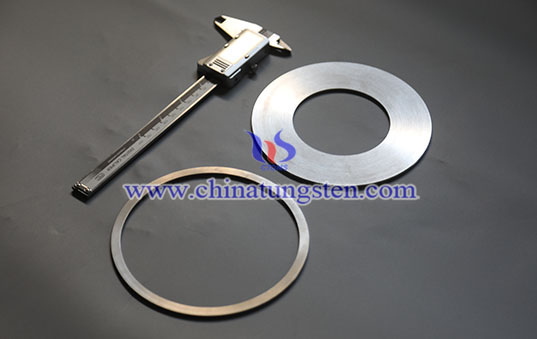
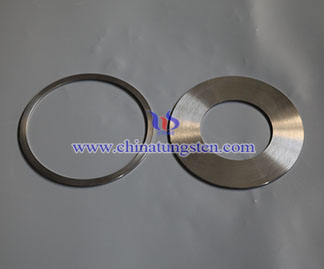
1. What Are Tungsten Alloy Radiation Shielding Rings?
Tungsten alloy radiation shielding rings are annular radiation shielding components manufactured from high-density tungsten alloy (typically containing 90%–97% tungsten with nickel, iron, or copper binders) through powder metallurgy and precision machining processes. They are designed for radiation protection and beam control applications requiring ring-shaped structures. With high density and atomic number, CTIA’s tungsten alloy radiation shielding rings effectively attenuate γ-rays and X-rays while providing uniform circumferential shielding, collimation functions, and reliable performance with compact structures, high strength, lead-free properties, and high-temperature stability for medical, nuclear, industrial, and research applications.
2. Features of CTIA’s Tungsten Alloy Radiation Shielding Rings
(1) Efficient Radiation Shielding: High density of 16.5–18.8 g/cm³ and tungsten’s high atomic number (Z=74) enable excellent γ-ray and X-ray attenuation, achieving 1.3–1.7 times the shielding capability of lead with only 60%–75% of lead thickness under the same protection requirements.
(2) High Strength and Durability: High tensile strength of 700–1000 MPa provides excellent mechanical strength and toughness, allowing the rings to withstand vibration, impact, and thermal stress without deformation or cracking.
(3) High-Temperature Stability: A melting point of approximately 3410°C enables stable performance in high-temperature environments, with reliable operation below 500°C for long-term applications.
(4) Precision Machining Capability: Precision machining processes, including turning, milling, drilling, and wire cutting, achieve dimensional tolerances up to ±0.01 mm for high-precision assembly requirements.
(5) Lead-Free Environmental Safety: Lead-free composition eliminates heavy metal contamination risks and meets environmental requirements for medical, nuclear, and industrial applications.
(6) Non-Magnetic Option: W-Ni-Cu alloy provides non-magnetic shielding rings suitable for magnetic-sensitive environments such as Magnetic Resonance Imaging (MRI).
3. Working Principle of Tungsten Alloy Radiation Shielding Rings
Tungsten alloy radiation shielding rings attenuate γ-rays and X-rays through the following physical interactions:
(1) Photoelectric Effect: Tungsten atoms absorb low-energy photons and reduce radiation energy.
(2) Compton Scattering: Medium- and high-energy photons interact with electrons, changing direction and losing energy.
(3) Pair Production: Photons above 1.022 MeV generate electron-positron pairs near atomic nuclei, converting radiation energy into particle energy.
4. Applications of CTIA’s Tungsten Alloy Radiation Shielding Rings
(1) Medical: Gamma knife systems, linear accelerators, brachytherapy equipment, and Computed Tomography (CT), Positron Emission Tomography (PET), and Single Photon Emission Computed Tomography (SPECT) devices requiring radiation shielding components for beam control, scattered radiation reduction, and imaging performance improvement.
(2) Nuclear Energy and Nuclear Industry: Reactor radiation protection structures, control rod guide shielding rings, nuclear fuel transport containers, and nuclear waste storage systems for reducing radiation leakage risks.
(3) Industrial Inspection: Industrial CT and γ-ray inspection equipment requiring collimation components to control radiation direction and improve detection accuracy.
(4) Geological Exploration: Oil logging instruments and downhole detection systems requiring radiation protection structures and radiation collimation components.
(5) Research and Security Inspection: Particle accelerators, high-energy physics equipment, and large-scale container inspection systems requiring beam shielding and radiation protection structures.
(6) Defense and Aerospace: Nuclear-powered equipment compartments, satellites, missiles, and aerospace platforms requiring radiation protection for precision electronic systems and critical components.
5. Specifications of CTIA’s Tungsten Alloy Radiation Shielding Rings
(1) Materials: W-Ni-Fe, W-Ni-Cu
(2) Grades: 90WNiFe, 92.5WNiFe, 95WNiFe, 90WNiCu, etc.
(3) Tungsten Content: 90%–97%
(4) Density: 16.5–18.8 g/cm³
(5) Dimensions: Outer diameter 10–200 mm, inner diameter 5–150 mm, thickness 2–50 mm, customizable
CTIA GROUP has nearly 30 years of experience in tungsten alloy manufacturing, specializing in the design and precision machining of tungsten alloy shielding components. With advanced manufacturing capabilities and diverse material options, CTIA provides tungsten alloy radiation shielding rings with various compositions and structural designs to meet requirements for radiation protection, precision assembly, and long-term stability in medical, nuclear, industrial inspection, research, and aerospace applications.
For any inquiry, please contact tungsten alloy manufacturer: CTIA GROUP
Email: sales@chinatungsten.com
Tel: 0086 592 5129696 / 0086 592 5129595
Website: tungsten-alloy.com
WeChat:

Related Products: