Tungsten Alloy Radiation Shielding Blocks
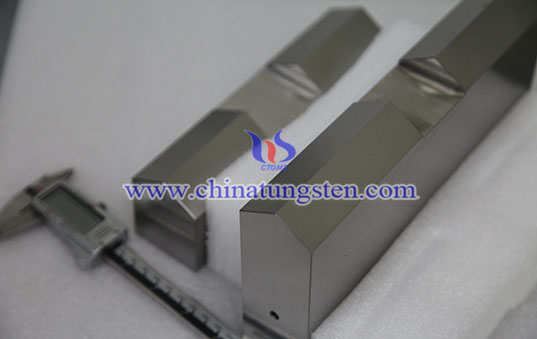
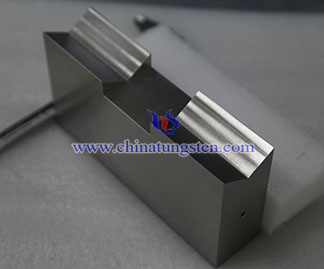
1. What Are Tungsten Alloy Radiation Shielding Blocks?
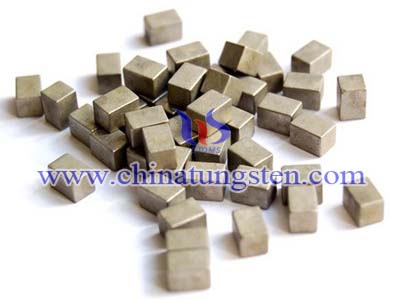
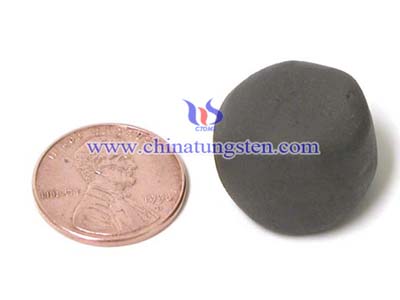
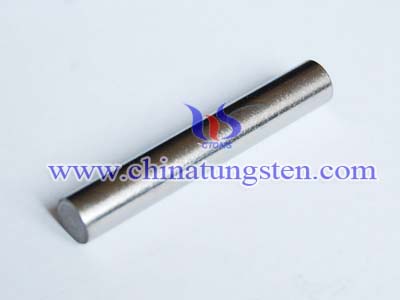
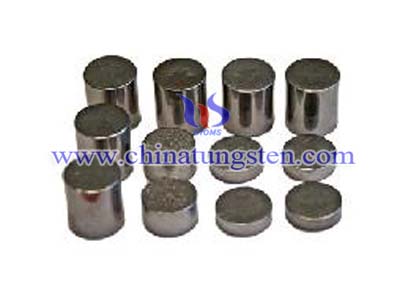
Tungsten alloy radiation shielding blocks are block-shaped radiation protection components manufactured from high-density tungsten alloy, mainly used to attenuate and block high-energy radiation such as X-rays and γ-rays. Compared with traditional lead shielding materials, CTIA's tungsten alloy shielding blocks provide higher density, smaller volume, lead-free environmental performance, and excellent mechanical properties, enabling efficient radiation protection in limited spaces. They are widely used in medical equipment, nuclear industry, industrial inspection, research, and aerospace applications.
2. Features of CTIA's Tungsten Alloy Radiation Shielding Blocks
(1) Efficient Shielding: Provides a density of 16.5–18.8 g/cm³, over 1.5 times higher than lead, delivering excellent X-ray and γ-ray attenuation performance while reducing shielding thickness and volume requirements.
(2) Space Efficiency: Enables compact shielding structures under the same protection requirements, making it suitable for medical equipment, inspection instruments, and space-limited applications.
(3) Environmental Safety: Contains no lead and avoids contamination risks associated with traditional lead shielding materials, meeting safety requirements in medical, nuclear technology, and industrial protection applications.
(4) Long-Term Stability: Provides high strength, high-temperature resistance, and corrosion resistance, maintaining structural integrity under demanding operating conditions.
(5) Improved Machinability and Toughness: Offers better machinability and toughness than pure tungsten through alloying with nickel, iron, copper, and other elements, supporting complex structural processing. W-Ni-Fe alloy, for example, achieves 10%–15% elongation.
3. Applications of CTIA's Tungsten Alloy Radiation Shielding Blocks
(1) Medical and Nuclear Medicine: Used in radiation therapy equipment such as Linear Accelerator (LINAC) head shielding, radioactive isotope container protection layers, and local shielding structures in imaging equipment including CT and Positron Emission Tomography (PET) systems.
(2) Nuclear Industry: Used in radiation shielding walls for nuclear facilities, equipment protection structures, and shielding modules in radioactive material storage and transportation containers.
(3) Industrial Non-Destructive Testing: Used in industrial CT and γ-ray inspection equipment to control radiation beam ranges, reduce radiation leakage, and improve operator safety.
(4) Research and Aerospace: Used in radiation shielding structures for high-energy physics equipment and particle accelerators, as well as protection of electronic systems in satellites and deep-space spacecraft from cosmic radiation.
(5) Energy: Used as key shielding modules in oil and gas exploration logging equipment.
4. Specifications of CTIA's Tungsten Alloy Radiation Shielding Blocks
(1) Materials: W-Ni-Fe, W-Ni-Cu
(2) Compositions: 90WNiFe, 92.5WNiFe, 95WNiFe, 90WNiCu
(3) Tungsten Content: 90%–97%
(4) Density: 16.5–18.8 g/cm³
(5) Dimensions: Length 50–1000 mm, width 20–300 mm, height 10–200 mm, customizable
CTIA GROUP brings nearly 30 years of expertise in tungsten alloy manufacturing, offering customized radiation shielding blocks with optimized material compositions, density levels, and structural designs. With precision processing capabilities and strict quality control, CTIA delivers reliable shielding solutions for medical, nuclear technology, industrial inspection, and research applications requiring efficient radiation protection and long-term performance.
For any inquiry, please contact tungsten alloy manufacturer: CTIA GROUP
Email: sales@chinatungsten.com
Tel: 0086 592 5129696 / 0086 592 5129595
Website: tungsten-alloy.com
WeChat:

Related Products: