Tungsten Alloy Anti-Scatter Grids
1. What Are Tungsten Alloy Anti-Scatter Grids?
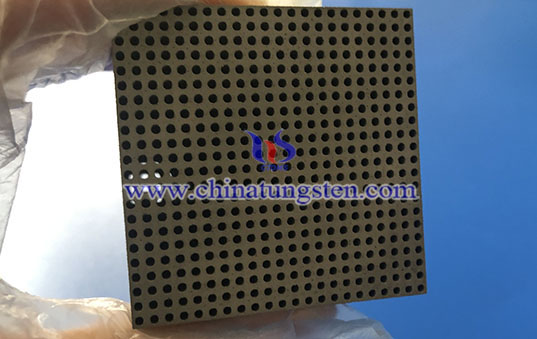
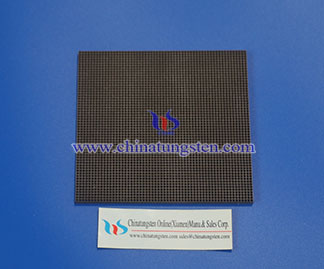
Tungsten alloy anti-scatter grids, also known as tungsten alloy grids and tungsten alloy collimators, are precision radiation control components used in X-ray detector systems for Computed Tomography (CT), Digital Radiography (DR), and security screening CT. CTIA’s tungsten alloy anti-scatter grids consist of thin, high-density tungsten alloy grid strips that selectively absorb scattered X-rays deviating from the primary beam direction, reducing scattered radiation reaching detectors and improving image contrast, clarity, and signal-to-noise ratio.
2. Features of CTIA’s Tungsten Alloy Anti-Scatter Grids
(1) Efficient Scatter Suppression: High density (16.7–18.8 g/cm³) and high atomic number (Z=74) effectively attenuate scattered X-rays and lower detector background signal.
(2) Thin Walls with High Grid Ratio: Thinner grid walls achieve higher grid ratios while balancing primary X-ray transmission and imaging quality.
(3) Complex Structure Forming: Selective laser melting (SLM) and other laser additive manufacturing processes enable fine grid strips, narrow pitch, honeycomb, and two-dimensional grid structures.
(4) Good Dimensional Stability: High strength, hardness, and wear resistance maintain thin-wall structural accuracy over long-term use and minimize deformation effects on imaging performance.
(5) Precision Customization: Grid strip thickness, spacing, height, and structure can be adjusted to detector size, X-ray energy, and imaging requirements.
(6) Lead-Free and Environmentally Friendly: No lead is used as the primary shielding material, reducing environmental management issues and suiting medical and inspection equipment.
3. Applications of CTIA’s Tungsten Alloy Anti-Scatter Grids
(1) Medical Imaging: Used in CT, DR, and mammography systems to suppress scattered radiation and improve image contrast and detail resolution.
(2) Nuclear Medicine and Radiotherapy Equipment: Used as radiation control components in Single Photon Emission Computed Tomography (SPECT), Positron Emission Tomography (PET), and certain radiotherapy equipment to reduce scatter interference and improve imaging quality or beam control.
(3) Industrial Non-Destructive Testing: Used in industrial X-ray inspection, casting and weld inspection, and aerospace component imaging to reduce scatter background and improve identification of internal defects.
(4) Security Screening and Scientific Research: Used in baggage CT, vehicle inspection systems, and X-ray detector systems, and in anti-scatter and beam-shaping components for high-energy physics experiments to improve detection resolution and experimental signal-to-noise ratio.
4. Specifications of CTIA’s Tungsten Alloy Anti-Scatter Grids
(1) Materials: W-Ni-Fe, W-Ni-Cu
(2) Density: 16.7–18.8 g/cm³
(3) Grid Wall Thickness: 0.08–0.25 mm; customizable
(4) Grid Spacing: Designed according to detector structure, X-ray energy, and grid ratio
(5) Structures: Parallel, focused, mesh, honeycomb, and custom configurations
CTIA GROUP has nearly 30 years of experience in tungsten alloy manufacturing, with expertise in precision machining of high-density tungsten alloy radiation shielding components. CTIA provides tungsten alloy anti-scatter grids in different material systems, structures, dimensions, and precision levels according to requirements for CT, DR, security screening CT, and industrial X-ray inspection equipment, supporting thin-wall fabrication, scatter suppression, and precision assembly.
For any inquiry, please contact tungsten alloy manufacturer: CTIA GROUP
Email: sales@chinatungsten.com
Tel: 0086 592 5129696 / 0086 592 5129595
Website: tungsten-alloy.com
WeChat:

Related Products: