Tungsten Alloy Radiation Shield vs. Lead Shield


Tungsten alloy radiation shield and lead shield are commonly used for radiation protection against X-rays, gamma rays, and other radiation. Lead has high density and a long history of use, but its mechanical strength and dimensional stability are limited. CTIA’s tungsten alloy radiation shield uses tungsten (W) as matrix, with nickel (Ni), iron (Fe), or copper (Cu) as binder phases, combining effective radiation attenuation with high density, strength, machinability, and dimensional stability. The two shielding materials differ in density, shielding performance, structural reliability, precision machining, and application adaptability, making tungsten alloy suitable for radiation protection components requiring compact dimensions, high strength, and long-term stability.
1. Density Comparison: Tungsten Alloy Radiation Shield for Space Optimization
Tungsten alloy typically has density of 16.5–18.8 g/cm³, compared with approximately 11.34 g/cm³ for lead. Higher material density gives tungsten alloy higher shielding capability per unit volume, enabling effective radiation protection with more compact dimensions. Tungsten alloy radiation shield is suitable for space-constrained medical equipment, inspection instruments, and precision devices where reduced shielding thickness and higher equipment integration are required.
2. Shielding Performance Comparison: Tungsten Alloy Radiation Shield for Efficient Protection
Tungsten has an atomic number of 74, while lead has an atomic number of 82, and both materials provide effective protection against X-rays and gamma rays. With typical density of 16.5–18.8 g/cm³ compared with approximately 11.34 g/cm³ for lead, tungsten alloy provides higher shielding capability per unit volume and can achieve effective radiation protection with more compact dimensions.
3. Strength Comparison: Tungsten Alloy Radiation Shield for Structural Reliability
Lead is a soft metal with relatively low mechanical strength and is prone to deformation. Tungsten alloy forms stable microstructure through tungsten particles and binder phases, providing higher strength and wear resistance. Tensile strength can reach 700–1000 MPa, supporting structural stability during long-term operation and making tungsten alloy suitable for shielding components with demanding mechanical requirements.
4. Dimensional Stability Comparison: Tungsten Alloy Radiation Shield for Precision Equipment
Tungsten alloy has thermal expansion coefficient of approximately 4.5 × 10⁻⁶/K, providing good dimensional stability. Lead has thermal expansion coefficient of approximately 29 × 10⁻⁶/K, resulting in greater dimensional changes with temperature variation. Tungsten alloy is therefore more suitable for radiation protection components requiring high dimensional accuracy and structural stability.
5. Precision Machining Comparison: Tungsten Alloy for Complex Structures
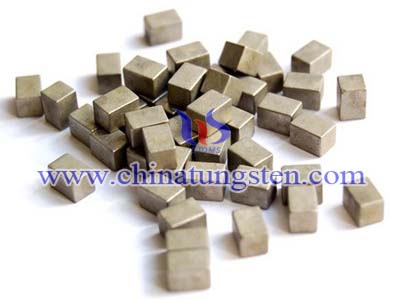
Lead is easy to machine but lacks mechanical strength, making complex structural parts susceptible to deformation. Tungsten alloy manufactured through powder metallurgy offers high machining adaptability and structural integrity. CTIA utilizes turning, grinding, drilling, wire Electrical Discharge Machining (EDM), and other precision processes to manufacture customized ring-shaped, sleeve, block, and complex geometries for high-precision applications.
6. Material Selection: Tungsten Alloy for High-Performance Protection
Lead shield offers a cost advantage and remains suitable for some conventional radiation protection applications. Tungsten alloy radiation shield combines high density, high strength, dimensional stability, and lead-free composition, making it more suitable for space-constrained, precision-structured, and long-term operating equipment.
Tungsten alloy radiation shield and lead shield differ in density, shielding performance, mechanical strength, dimensional stability, and machinability. The main performance and application differences are summarized in picture below.

CTIA GROUP specializes in tungsten alloy manufacturing and precision machining, backed by nearly 30 years of experience. CTIA manufactures tungsten alloy radiation shield in W-Ni-Fe and W-Ni-Cu material systems, with customized grades, tungsten content, dimensions, and structural configurations for medical equipment, industrial inspection, radioactive source protection, and high-end equipment requiring high-performance radiation shielding.
For any inquiry, please contact tungsten alloy manufacturer: CTIA GROUP
Email: sales@chinatungsten.com
Tel: 0086 592 5129696 / 0086 592 5129595
Website: tungsten-alloy.com
WeChat:

Related Products: