Tungsten Alloy Collimators
1. What Are Tungsten Alloy Collimators?
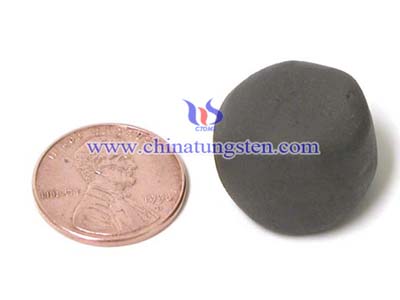
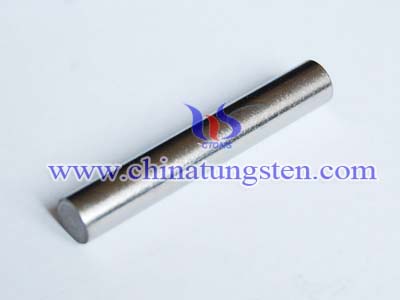
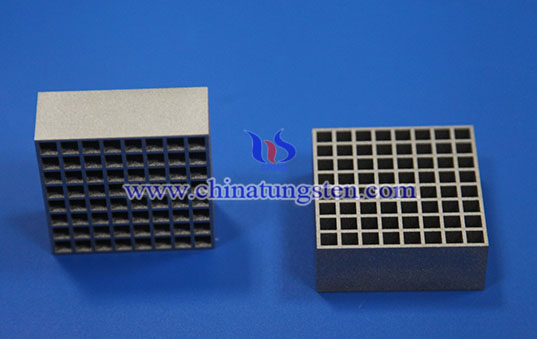
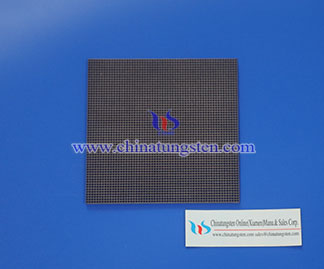
Tungsten alloy collimators are radiation control devices made from high-density tungsten heavy alloys to restrict the direction and spatial coverage of X-ray and γ-ray beams, ensuring radiation output along preset paths while absorbing scattered and stray radiation to improve beam utilization and positioning accuracy. CTIA’s tungsten alloy collimators provide precise beam shaping and radiation protection through tungsten’s high density, high atomic number, and strong radiation attenuation, with more compact dimensions, higher mechanical strength, better dimensional stability, and lead-free composition than traditional lead collimators, making them suitable for radiotherapy equipment, medical imaging systems, industrial inspection devices, and nuclear technology facilities.
2. Features of CTIA’s Tungsten Alloy Collimators
(1) Efficient Shielding: Density of 16.7–18.8 g/cm³, about 1.5–1.6 times that of lead (11.34 g/cm³), provides strong X-ray and γ-ray attenuation while enabling thinner walls and more compact structures under equivalent shielding requirements.
(2) Precision Beam Control: Precision machining, wire EDM, and micro-hole drilling produce channels, slits, leaves, and complex geometries for accurate control of beam shape, size, and direction, improving imaging and treatment accuracy.
(3) Mechanical Stability: High strength, hardness, wear resistance, and dimensional stability maintain structural reliability under long-term radiation, elevated temperatures, and continuous operation.
(4) Lead-Free Composition: Lead-free material eliminates lead contamination risks for medical, nuclear technology, and industrial radiation protection.
(5) Flexible Machining: Complex multi-leaf, multi-hole, conical, and customized structures accommodate different radiation energies, equipment spaces, focal lengths, and application requirements.
3. Applications of CTIA’s Tungsten Alloy Collimators
(1) Medical Radiotherapy: Applied to primary collimators, secondary collimators, and Multi-leaf Collimators (MLC) in Medical Linear Accelerators (LINAC) for precise radiation field shaping, supporting Conformal Radiation Therapy (CRT) and Intensity Modulated Radiation Therapy (IMRT) while reducing radiation dose to surrounding healthy tissues.
(2) Medical Imaging: Applied to radiation collimation structures in Computed Tomography (CT), Single Photon Emission Computed Tomography (SPECT), and Positron Emission Tomography (PET) systems to restrict beam coverage and reduce scattered radiation, improving image resolution and diagnostic accuracy.
(3) Industrial Inspection: Applied to beam control in industrial γ-ray radiography and industrial CT systems to restrict radiation coverage, control beam direction, and improve inspection precision.
(4) Scientific Research and Nuclear Technology: Applied to radiation shaping and beam control in particle accelerators, nuclear instrumentation, and neutron scattering experimental equipment to control radiation direction and energy distribution for research applications.
4. Specifications of CTIA’s Tungsten Alloy Collimators
(1) Materials: W-Ni-Fe, W-Ni-Cu
(2) Density: 16.7–18.8 g/cm³
(3) Dimensions: Customizable length, width, thickness, apertures
CTIA GROUP has nearly 30 years of experience in tungsten alloy manufacturing, with expertise in precision machining of tungsten alloy shielding components. CTIA supplies tungsten alloy collimators in customized densities, dimensions, and structures based on radiation energy, equipment configuration, and application requirements, meeting needs for beam control, machining accuracy, and long-term stability across medical, industrial inspection, nuclear technology, and related applications.
For any inquiry, please contact tungsten alloy manufacturer: CTIA GROUP
Email: sales@chinatungsten.com
Tel: 0086 592 5129696 / 0086 592 5129595
Website: tungsten-alloy.com
WeChat:

Related Products: