3D Printed Tungsten Alloy Radiation Shielding Parts
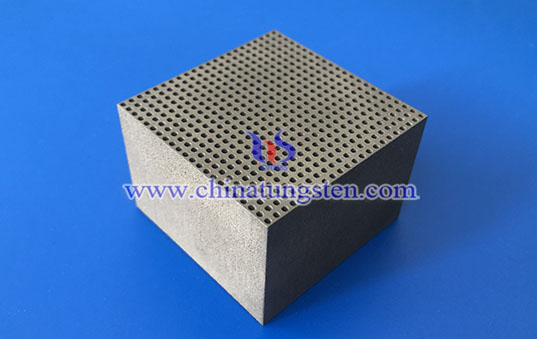
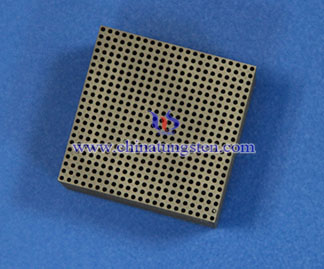
1. What Are 3D Printed Tungsten Alloy Radiation Shielding Parts?
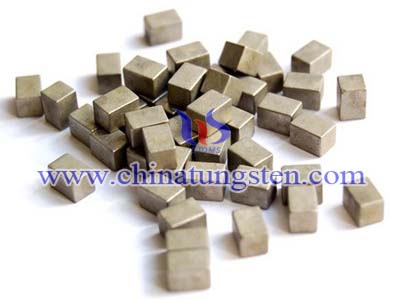
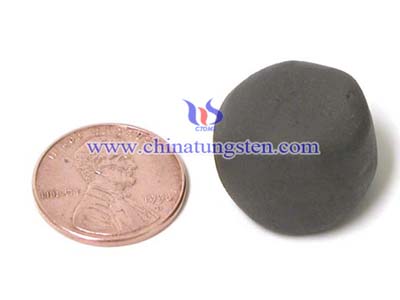
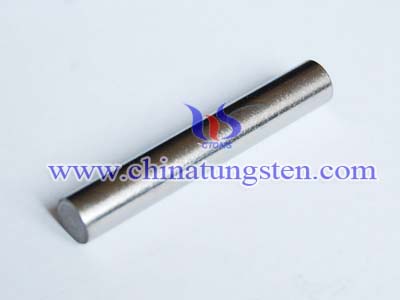
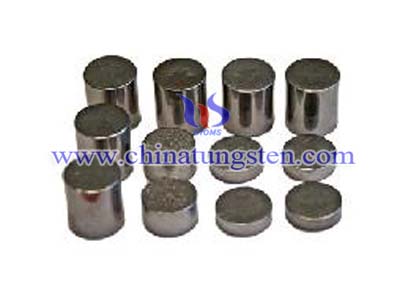
3D printed tungsten alloy radiation shielding parts are radiation protection components manufactured using additive manufacturing technology, enabling the fabrication of complex structures such as irregular shapes, hollow structures, porous structures, and integrated designs through layer-by-layer processing. CTIA’s 3D printed tungsten alloy radiation shielding parts provide effective X-ray and γ-ray attenuation and meet the requirements for complex radiation shielding components in medical equipment, industrial inspection, nuclear technology, and aerospace applications.
2. Features of CTIA’s 3D Printed Tungsten Alloy Radiation Shielding Parts
(1) Complex Structure Fabrication: Enables the production of internal channels, irregular holes, variable wall thicknesses, and lattice structures that are difficult to achieve with conventional machining, supporting complex radiation shielding designs in limited spaces.
(2) High Material Utilization: Near-net-shape manufacturing reduces machining waste and improves the utilization of high-value tungsten alloy materials, especially for complex and customized components.
(3) Rapid Customization Capability: Direct fabrication from 3D models eliminates the need for traditional tooling, shortening development cycles and supporting small-batch, multi-specification, and customized production.
(4) Structural Design Optimization: Digital design enables lightweight structures, localized reinforcement, and functional integration, improving shielding efficiency while reducing overall component size and weight.
(5) Effective Radiation Shielding: The high atomic number (Z=74) and high density of tungsten provide strong attenuation of X-rays and γ-rays, enabling compact and efficient radiation protection.
3. Applications of CTIA’s 3D Printed Tungsten Alloy Radiation Shielding Parts
(1) Medical
① Anti-scatter grids for CT scanning systems, X-ray detector shielding components, and customized imaging shielding parts for reducing scattered radiation and improving image quality.
② Collimators, multi-leaf collimator (MLC) components, and customized beam control parts for radiotherapy equipment to achieve precise radiation field adjustment and intensity-modulated radiotherapy.
③ Radioactive drug shielding containers, syringe shielding sleeves, and detector shielding components for PET (Positron Emission Tomography) and nuclear medicine imaging systems.
(2) Industrial and Nuclear
① Shielding components for industrial inspection equipment, industrial flaw detectors, and large-scale testing systems to provide localized radiation protection.
② Accelerator shielding components and radiation protection structures for high-radiation environments.
(3) Aerospace
① Irregular shielding blocks, hollow shielding parts, porous shielding structures, lattice structures, and integrated functional components for lightweight radiation protection in space-constrained environments.
② Shielding components for precision electronic systems in satellites, spacecraft, and space exploration equipment to reduce the impact of cosmic radiation and space radiation.
4. Manufacturing Technologies of CTIA’s 3D Printed Tungsten Alloy Radiation Shielding Parts
(1) Indirect 3D Printing Technology: Uses Powder Extrusion Printing (PEP), Fused Deposition Modeling (FDM), or Fused Filament Fabrication (FFF) technologies to produce tungsten alloy green parts by combining tungsten alloy powder with binders, followed by debinding and high-temperature sintering to obtain dense tungsten alloy shielding parts.
(2) Direct Metal 3D Printing Technology: Uses Laser Powder Bed Fusion (LPBF), Selective Laser Melting (SLM), Direct Metal Laser Sintering (DMLS), Electron Beam Melting (EBM), or Laser Directed Energy Deposition (LDED) technologies to directly process tungsten alloy powder through high-energy beams for complex structure fabrication.
5. Specifications of CTIA’s 3D Printed Tungsten Alloy Radiation Shielding Parts
(1) Materials: W-Ni-Fe alloy feedstock (granules/filaments with binders)
(2) Tungsten Content: ≥90%
(3) Density: 17.0–18.75 g/cm³
(4) Dimensions: Customized to meet different application requirements
CTIA GROUP has nearly 30 years of experience in tungsten alloy manufacturing, integrating powder metallurgy, additive manufacturing, and precision machining technologies. Based on equipment structures, radiation requirements, and application conditions, CTIA provides customized tungsten alloy shielding components through material selection, structural optimization, and precision manufacturing. By combining additive manufacturing with conventional processing methods, CTIA delivers reliable radiation shielding components for medical, nuclear technology, industrial inspection, and aerospace applications.
For any inquiry, please contact tungsten alloy manufacturer: CTIA GROUP
Email: sales@chinatungsten.com
Tel: 0086 592 5129696 / 0086 592 5129595
Website: tungsten-alloy.com
WeChat:

Related Products: