Tungsten Alloy Shielding Parts
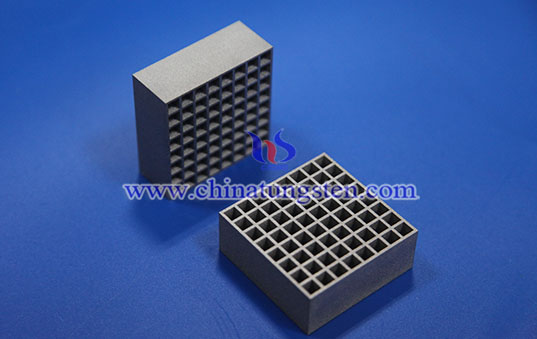
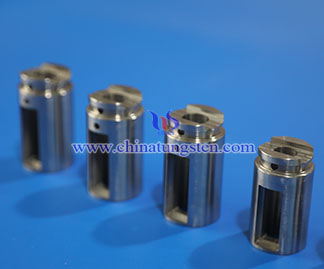
1. What Are Tungsten Alloy Shielding Parts?
Tungsten alloy shielding parts, also known as tungsten alloy radiation shielding parts, are radiation protection components manufactured from tungsten heavy alloy, mainly including W-Ni-Fe and W-Ni-Cu alloy systems. These components are mainly used for shielding ionizing radiation such as X-rays and γ-rays. With high density, high atomic number, and excellent radiation attenuation capability, CTIA’s tungsten alloy shielding parts provide effective radiation protection within limited spaces. They are widely used in medical equipment, nuclear medicine systems, radioactive source protection devices, industrial non-destructive testing equipment, oil well logging instruments, and advanced precision equipment.
2. Features of CTIA’s Tungsten Alloy Shielding Parts
(1) High Density and Efficient Radiation Shielding
Tungsten alloys typically have a density of 16.5–18.8 g/cm³, which is more than 1.5 times higher than lead (11.34 g/cm³) and over twice that of ordinary steel. Tungsten has a high atomic number (Z=74), enabling effective attenuation of X-rays and γ-rays through the photoelectric effect and Compton scattering. Combining high density and excellent radiation absorption capability, tungsten alloy achieves effective shielding performance with smaller dimensions. Compared with traditional lead shielding materials, tungsten alloy can reduce material thickness while meeting the same protection requirements, making it suitable for space-limited medical equipment, inspection instruments, and precision devices.
(2) High Strength and Dimensional Stability
While maintaining high density, tungsten alloy provides excellent mechanical properties, including high strength, hardness, and wear resistance. By optimizing tungsten content (typically 90%–97%) and binder phase ratios in W-Ni-Fe and W-Ni-Cu alloy systems, the material achieves improved toughness and impact resistance, maintaining excellent dimensional stability and structural reliability during long-term operation.
(3) Precision Machining Capability
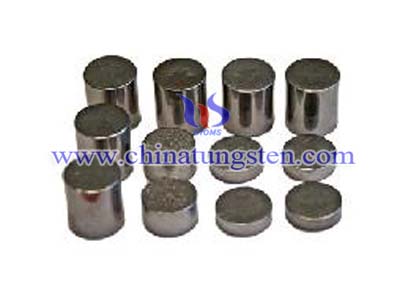
Compared with pure tungsten materials, tungsten alloy provides better machining adaptability and can be precision processed through turning, grinding, and Electrical Discharge Machining (EDM). CTIA manufactures various tungsten alloy shielding components, including tungsten alloy radiation shielding blocks, plates, tubes, rings, sleeves, containers and collimators. Customized structures, precision dimensions, and complex components can be manufactured according to different equipment requirements to meet high-precision assembly needs.
(4) Lead-Free Performance and Long-Term Reliability
Tungsten alloy contains no lead elements and provides non-toxic, environmentally friendly characteristics with excellent environmental adaptability. Compared with traditional lead shielding materials, tungsten alloy better meets the safety requirements of medical equipment, nuclear medicine systems, and precision instruments. With good chemical stability and corrosion resistance, tungsten alloy maintains stable performance during long-term service.
3. Types of CTIA’s Tungsten Alloy Shielding Parts
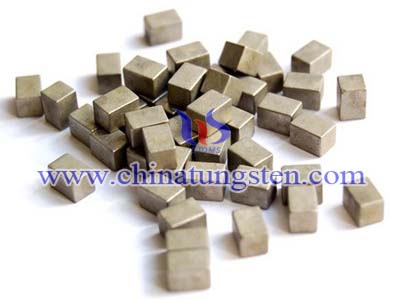
(1) Tungsten Alloy Radiation Shielding Blocks
Used in industrial radiation inspection equipment, experimental devices, and radiation protection systems as localized shielding structures to reduce radiation leakage by increasing the radiation transmission path.
(2) Tungsten Alloy Radiation Shielding Plates
Used in X-ray equipment, inspection systems, and precision instruments as equipment housings, protective partitions, and internal shielding structures for effective radiation isolation.
(3) Tungsten Alloy Radiation Shielding Sheets
Used for thin and lightweight radiation protection structures requiring reduced space occupation while maintaining effective shielding performance.
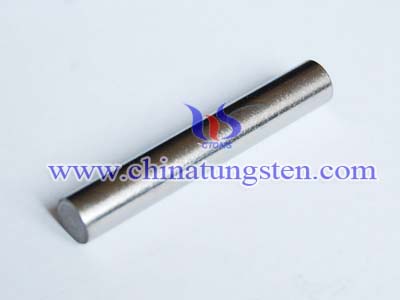
(4) Tungsten Alloy Radiation Shielding Tubes, Rings, and Sleeves
Used in radioactive source assemblies, oil well logging instruments, and nuclear detection equipment for circumferential radiation protection by covering critical components and reducing radiation leakage.
(5) Tungsten Alloy Radiation Shielding Containers
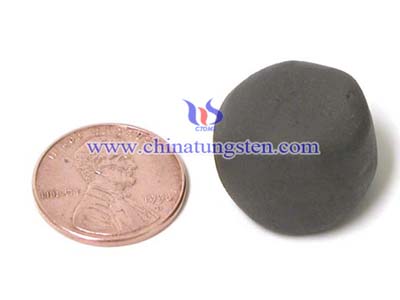
Used for the storage, transportation, and operation protection of radioactive isotopes, including Co-60, Cs-137, and Ir-192, reducing radiation leakage and improving operational safety.
(6) Tungsten Alloy Collimators
Used in radiotherapy equipment, nuclear medicine imaging systems, and industrial inspection systems to control X-ray or γ-ray propagation direction, reduce scattered radiation, improve radiation utilization efficiency, and enhance detection accuracy.
(7) Customized Tungsten Alloy Radiation Shielding Parts
Designed for special equipment structures and limited installation spaces, supporting customized manufacturing of complex geometries, special dimensions, and integrated shielding components.
4. Applications of CTIA’s Tungsten Alloy Shielding Parts
(1) Medical Radiation Protection and Nuclear Medicine
Applied in CT scanners, X-ray machines, linear accelerators, Gamma Knife systems, Intensity-Modulated Radiation Therapy (IMRT) systems, and Positron Emission Tomography (PET) equipment for radiation protection and beam control. Tungsten alloy collimators provide radiation beam control in radiotherapy systems to improve positioning accuracy, while radioactive source containers, isotope shielding containers, and syringe shielding sleeves support the storage, transportation, and operation protection of radioactive isotopes such as Tc-99m, I-131, and F-18.
(2) Industrial Radiation Inspection
Applied in Industrial Non-Destructive Testing (NDT), industrial CT, γ-ray inspection, and security inspection equipment for radiation control during the inspection of welds, pipelines, containers, and other structures, reducing scattering effects and improving inspection stability.
(3) Nuclear Facilities and Scientific Research
Applied in reactors, accelerators, and scientific research equipment for radiation protection structures, as well as in the storage, transportation, and operation protection of radioactive sources such as Co-60 and Cs-137 to reduce γ-ray leakage.
(4) Oil Well Logging and Aerospace
Applied in oil drilling, nuclear logging instruments, aerospace equipment, and plasma accelerator systems for radioactive source protection, radiation direction control, and localized radiation shielding under complex operating conditions.
5. Specifications of CTIA’s Tungsten Alloy Shielding Parts
(1) Materials: W-Ni-Fe, W-Ni-Cu
(2) Tungsten Content: 90%–97%
(3) Density: 16.5–18.8 g/cm³
(4) Grades: 90WNiFe, 92.5WNiFe, 95WNiFe, 97WNiFe
(5) Types: Blocks, plates, sheets, tubes, rings, containers, sleeves, radioactive source containers, collimators, and customized shielding components
(6) Customization: Irregular structures, precision dimensions, and complex assemblies
CTIA GROUP has specialized in tungsten alloy manufacturing for nearly 30 years, focusing on the design, precision machining, and customized production of tungsten alloy shielding parts. With extensive experience in medical equipment, nuclear medicine systems, industrial inspection, oil well logging, and advanced equipment applications, CTIA provides customized shielding solutions with various structures, dimensions, and performance specifications to meet requirements for radiation protection performance, machining accuracy, and long-term reliability.
For any inquiry, please contact tungsten alloy manufacturer: CTIA GROUP
Email: sales@chinatungsten.com
Tel: 0086 592 5129696 / 0086 592 5129595
Website: tungsten-alloy.com
WeChat:

Related Products: